Assembly Bill 1134
Status: Signed into Law (October 11, 2025)
Effective Date: January 1, 2026 (Extensions commence January 1, 2027)
Primary Focus: Coerced Marriage, Nullity of Marriage, and Penal Code Modernization
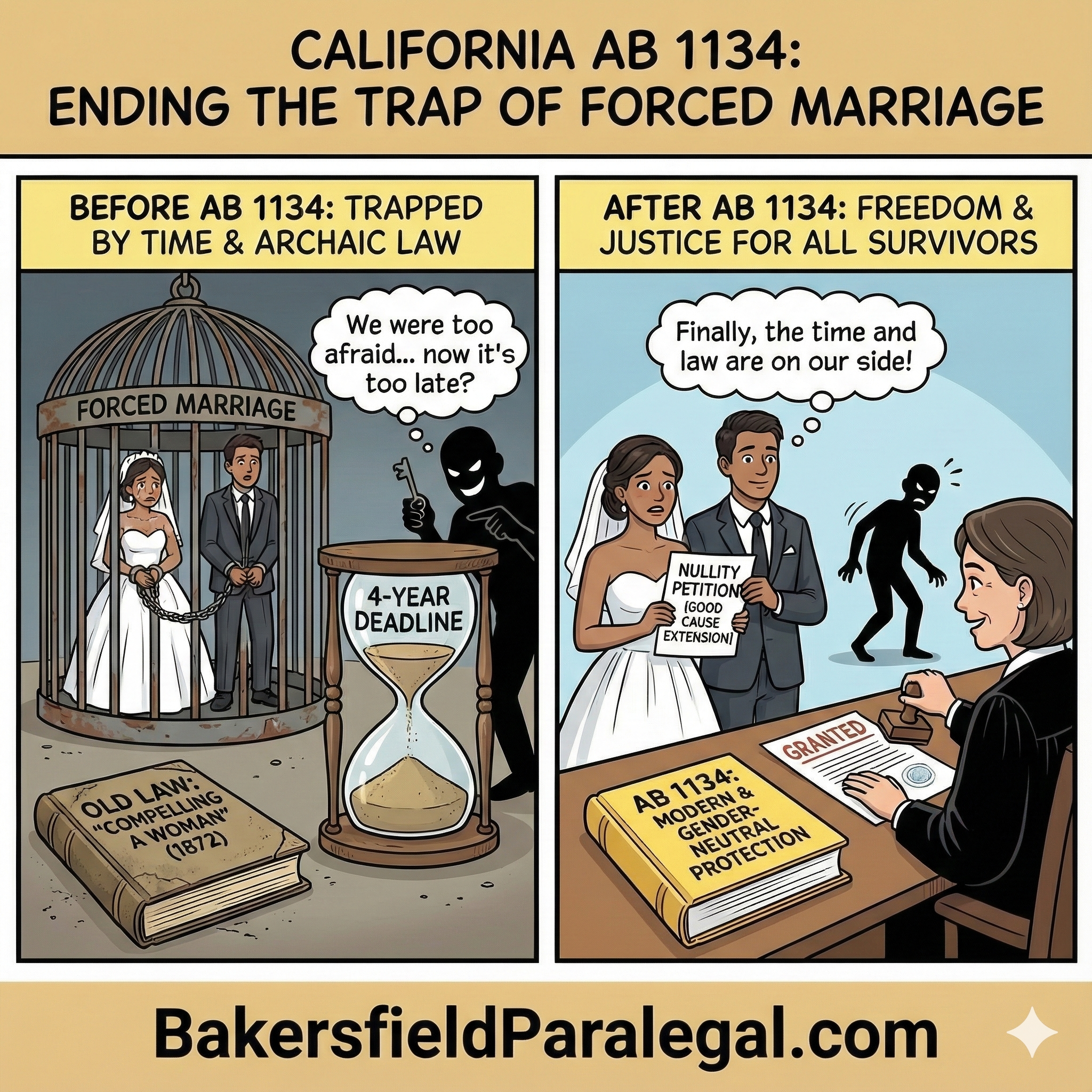
Assembly Bill 1134 (Bains), also known as the Coerced Marriage Act, significantly updates California law to better protect victims of forced or coerced marriages. The bill modernizes the Penal Code to be gender-neutral and removes outdated language, while also amending the Family Code to provide survivors with more time to seek a legal annulment. By acknowledging that survivors of abuse often need more than the standard four years to safely leave a relationship and navigate the legal system, this law ensures that justice is accessible to all victims, regardless of when they are ready to come forward.
1. Extending the Statute of Limitations for Nullity
- Good Cause Exception: Commencing January 1, 2027, the law authorizes a court to grant permission for a party to file a petition for a judgment of nullity of marriage even if the standard four-year filing period has passed.
- Standard of Proof: To file past the deadline, the petitioner must demonstrate “good cause” showing why the petition could not be filed within the original timeframe (e.g., ongoing coercion, safety concerns, or lack of resources).
- Empowering Survivors: This change aligns California with the majority of states that allow victims of force or coercion to seek an annulment on their own timeline.
2. Modernizing Penal Code Section 265
- Gender-Neutral Language: The bill updates the crime of forced marriage to apply to “any person,” replacing outdated gendered language that previously only protected women from being compelled to marry.
- Eliminating “Defilement”: Removes the archaic and problematic legal language regarding “compelling a woman to be defiled,” focusing the statute purely on the act of involuntary marriage through force, menace, or duress.
- Age Inclusivity: Clarifies that the crime of compelling a person to marry shall be applied equally regardless of the age of the victim at the time of the offense.
3. Judicial Council and Procedural Updates
- Form Development: The Judicial Council is required to develop or modify the necessary court forms to implement the “good cause” extension process for nullity petitions.
- Implementation Delay: While the Penal Code changes take effect in 2026, the specific Family Code extension provisions are delayed until January 1, 2027, to allow courts and self-help centers time to update their procedures and forms.
4. Protections Against Coercion
- Broad Definition of Force: The law recognizes that coercion can include physical force, threats of violence, or psychological and financial abuse used to trap an individual in a marriage against their will.
- Voidable vs. Void: While forced marriages remain “voidable,” the extension of the filing period ensures that the “ratification” of such a marriage (through continued cohabitation) is evaluated more carefully by the court when force is involved.