Assembly Bill 246
Authored by Assemblymember Isaac Bryan
Signed into Law: Oct 6, 2025
Assembly Bill 246, known as the Social Security Tenant Protection Act of 2025, establishes critical temporary statewide protections for residential tenants who depend on Social Security benefits. The legislation addresses the severe risk of homelessness faced by vulnerable residents when federal administrative delays or interruptions disrupt their primary source of income.
1. Implementation of the Affirmative Defense
- Legal Defense for Nonpayment: Tenants may now assert “Social Security hardship” as an affirmative defense in unlawful detainer (eviction) proceedings based specifically on the nonpayment of rent.
- Defining Hardship: The law defines “Social Security hardship” as a loss of household income resulting from any interruption in benefit payments caused by federal government action or inaction.
- Judicial Council Mandate: To ensure accessibility, the Judicial Council must adopt or modify legal forms by January 1, 2027, to help tenants implement this Act.
2. Eviction Protection and Stays
- Required Evidence: To utilize this defense, a tenant must provide evidence satisfactory to the court that Social Security payments were terminated, delayed, or reduced through no fault of their own.
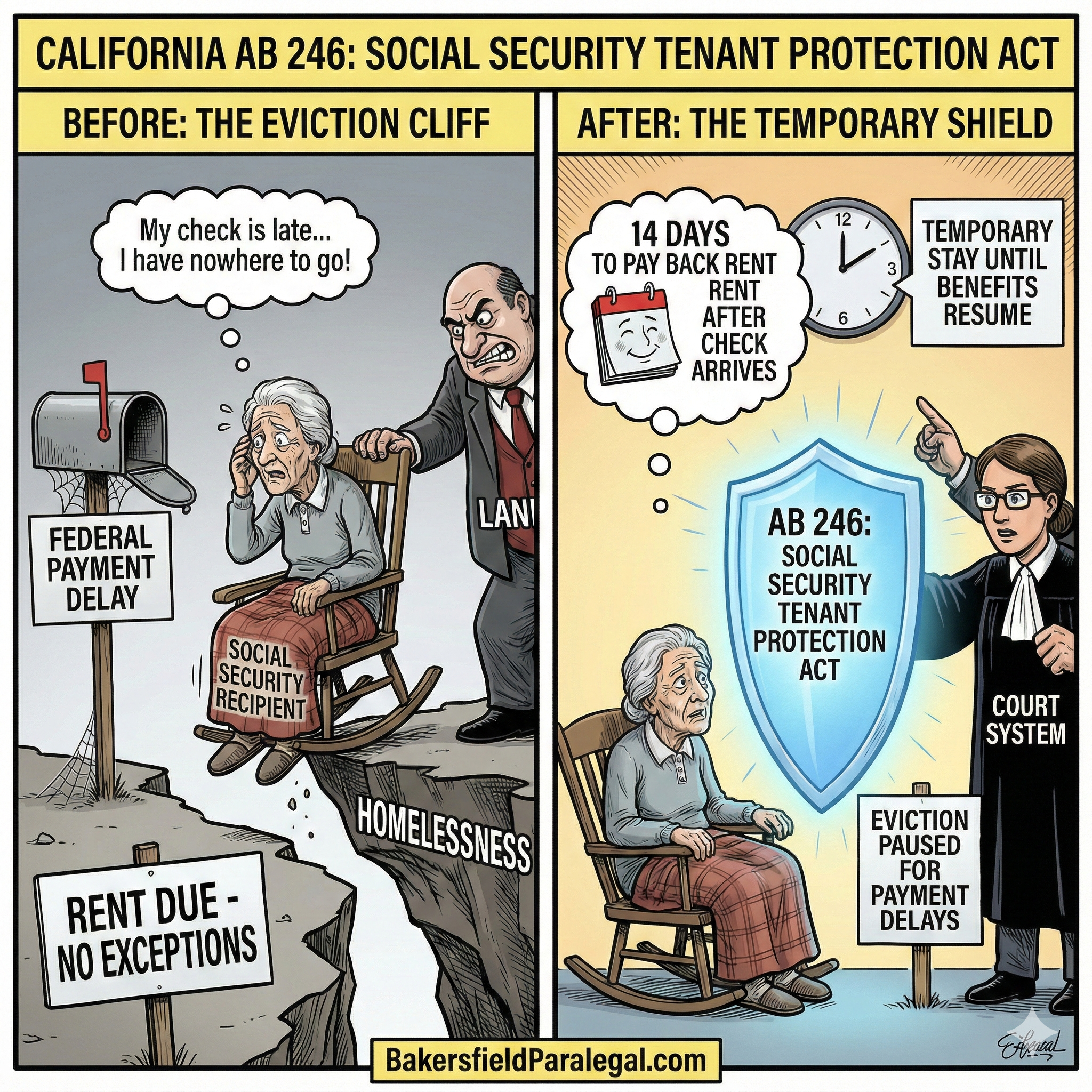
- Mandatory Stay of Action: If a hardship is proven, the court must stay (pause) the eviction proceedings until the tenant’s benefits are restored.
- Maximum Duration: These judicial stays are intended to last for as long as the payment interruption continues, up to a maximum of six months.
3. Limits and Tenant Obligations
- No Rent Forgiveness: The Act clarifies that it does not relieve tenants of their ultimate obligation to pay past-due rent; it only provides a temporary reprieve from eviction during federal delays.
- Restoration Timeline: Within 14 days of Social Security benefits being restored, a tenant must either pay all past-due rent or enter into a mutually agreed-upon payment plan with the property owner.
- Dismissal of Proceedings: If a tenant pays the arrears or secures a payment plan within the 14-day window, the court must dismiss the unlawful detainer action with prejudice.
Impact Summary
This legislation effectively shifts the financial risk of federal administrative delays away from vulnerable tenants, ensuring they are not displaced from their homes due to circumstances beyond their control. By allowing “Social Security hardship” as a valid legal defense, California provides a necessary safety net for seniors and individuals with disabilities during periods of federal benefit volatility. These protections are temporary and will remain in effect until the law’s sunset date on January 20, 2029.