Assembly Bill 495
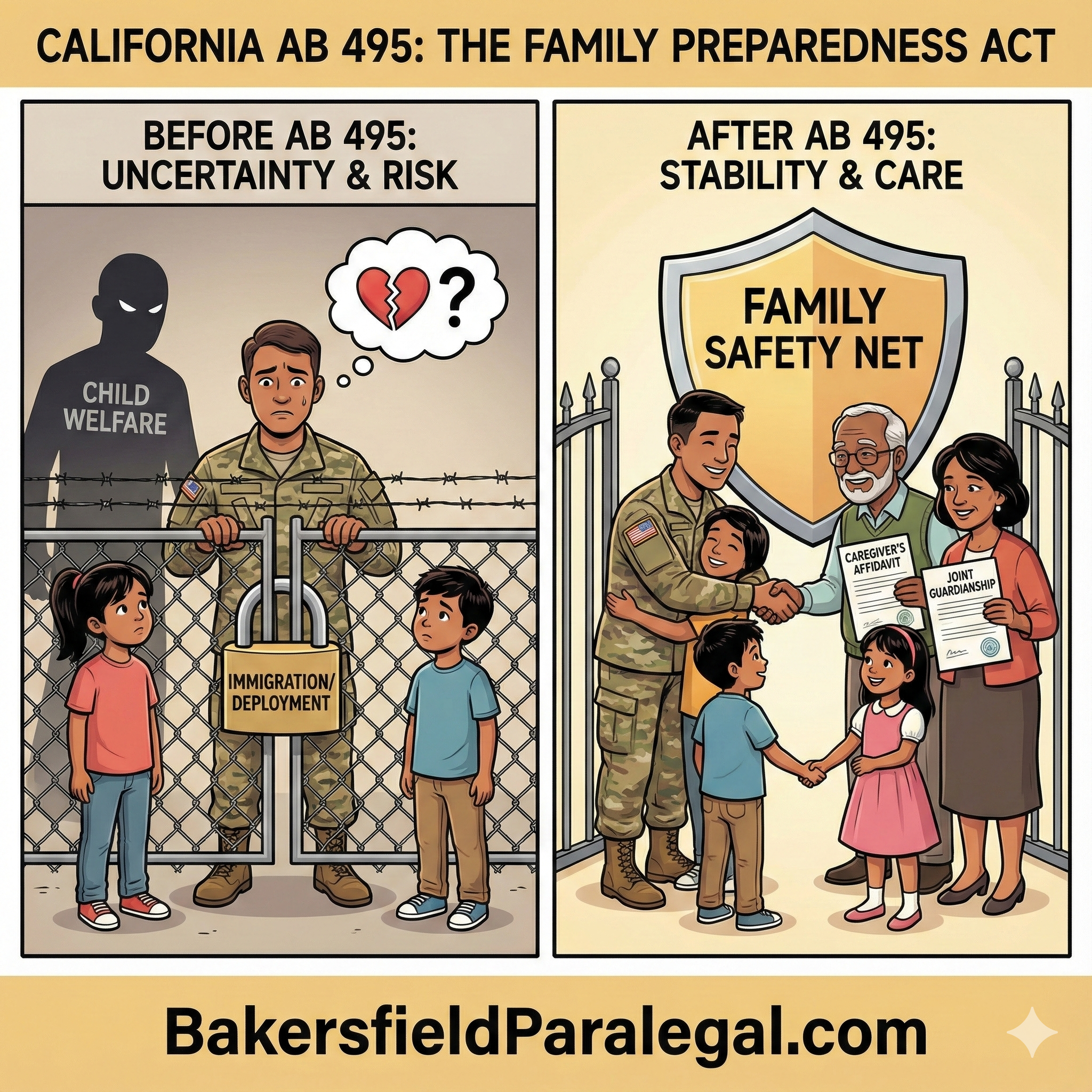
Status: Signed into Law (October 12, 2025)
Effective Date: January 1, 2026
Primary Focus: Continuity of Child Care, Guardianship Reform, and Immigration Privacy Protections
Known as the Family Preparedness Plan Act of 2025, AB 495 provides a legal framework to ensure children remain in the care of trusted relatives or guardians when a parent is temporarily unavailable due to military service, incarceration, or immigration enforcement actions. By modernizing caregiver authority and establishing joint guardianship options, the law aims to prevent unnecessary child welfare interventions and provide stability for California families during times of crisis.
1. Expanded Caregiver Authorization
- Broader Definition of “Relative”: Amends the Family Code to expand who qualifies as a relative for a Caregiver’s Authorization Affidavit (CAA).
- Included Kinship: Now explicitly includes adults related by blood, adoption, or affinity within the fifth degree, such as stepparents, stepsiblings, and “great” or “grand” aunts, uncles, or cousins.
- Legal Authority: Enables these relatives to enroll children in school and consent to school-related medical care without the need for a formal court-ordered guardianship.
2. Joint Guardianship Provisions
- Temporary Unavailability: Establishes a new probate procedure allowing a custodial parent to nominate a joint guardian to act alongside them.
- Trigger Events: The joint guardian’s authority is activated if the parent becomes unavailable due to detention, deployment, or other emergency circumstances.
- Preserving Parental Rights: Unlike traditional guardianship, this allows the parent to retain their legal rights while ensuring a “safety net” caregiver is immediately authorized to act in their absence.
3. Privacy & Immigration Protections
- Data Collection Ban: Prohibits K-12 schools and licensed childcare centers from collecting or documenting the citizenship or immigration status of students or their family members.
- Limited Enforcement Assistance: Requires the Attorney General to develop model policies by April 2026 to limit local assistance with federal immigration enforcement at schools and childcare sites.
- Mandatory Disclosures: Schools must inform parents of their child’s right to a free public education regardless of status and provide resources for creating family safety plans.
4. Childcare & Emergency Protocols
- Emergency Contacts First: Licensed daycare and preschool facilities are required to exhaust all parental instructions on a child’s emergency contact form before contacting child protective services.
- Staff Training: Encourages facility staff to be trained on family preparedness plans to handle sensitive situations where a parent fails to arrive for pickup due to unforeseen legal or emergency issues.