Senate Bill 655
Signed into Law: Oct 10, 2025
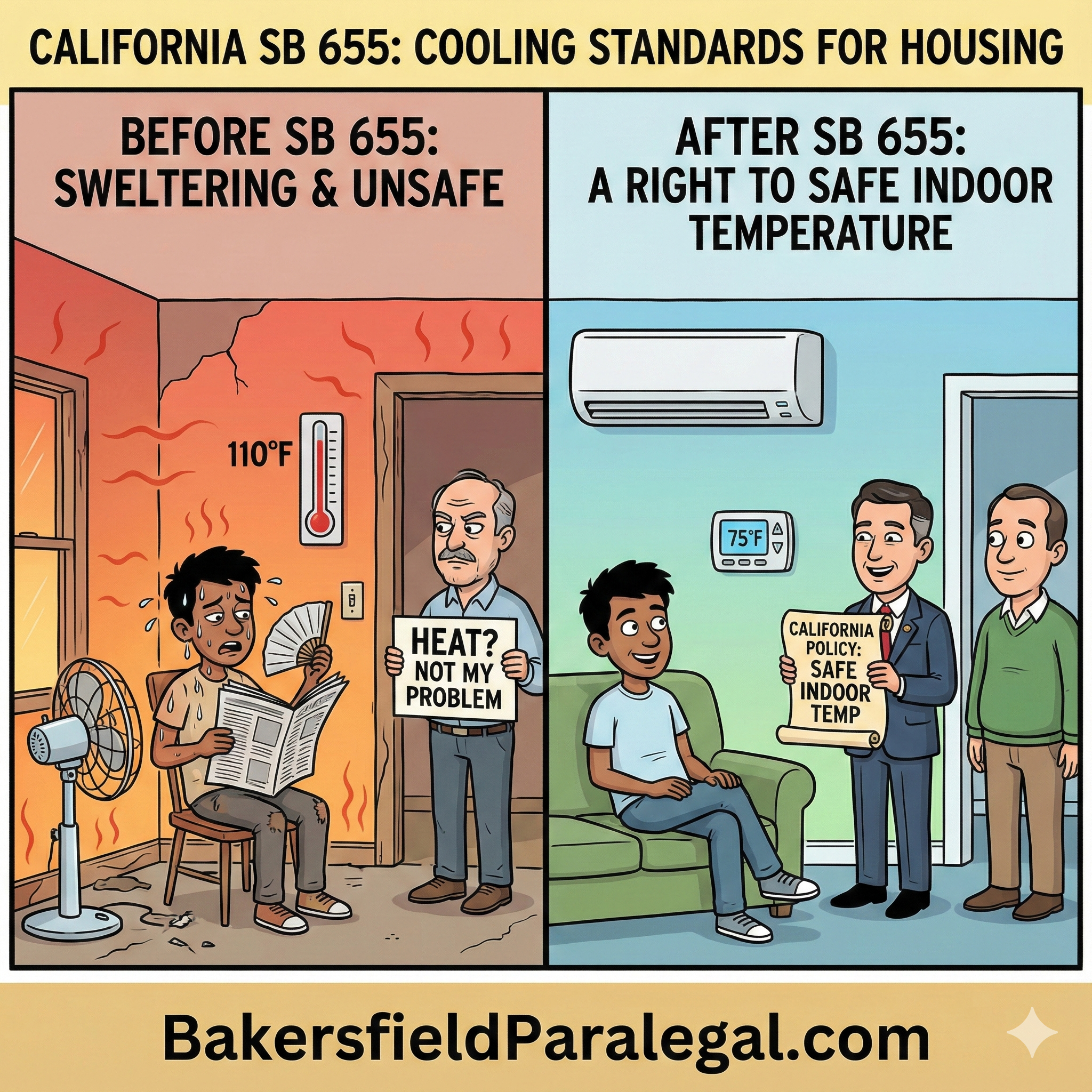
Senate Bill 655 establishes a historic first-in-the-nation state policy regarding maximum indoor temperatures for residential housing. While California law has long required homes to be able to maintain a minimum temperature of 68°F, SB 655 addresses the rising threat of extreme heat by moving toward a “cooling standard.”
State Policy: It is now the established policy of California that all dwelling units must be able to attain and maintain a safe maximum indoor temperature.
1. Integration into State Agency Mandates
- Mandatory Consideration: All relevant state agencies (including HCD, CalEPA, and the Public Utilities Commission) must consider this policy when revising or establishing programs, policies, and grant criteria.
- Regulatory Deadline: Beginning January 1, 2027, state agencies must incorporate the safe maximum indoor temperature standard into their formal regulations.
2. Focus on Vulnerable Populations
- The bill recognizes that low-income renters and disadvantaged communities are disproportionately affected by extreme heat, which is currently the leading weather-related cause of death in the United States.
- It aims to pave the way for making cooling technologies, like heat pumps, more accessible to these households.
3. Limits of the Bill
- No Immediate Infrastructure Mandate: The bill clarifies that it does not immediately expand state obligations to provide cooling or require the state to spend additional resources on infrastructure beyond existing responsibilities.
- Framework for the Future: Rather than setting a specific “hard number” (like 82°F) for all existing units immediately, it creates the legal framework for agencies to define and enforce these standards in building codes and future housing regulations.
Impact Summary
This legislation effectively treats extreme heat as a habitability issue similar to cold weather. By establishing this policy, California signals a shift toward requiring residential cooling capacity in the face of climate change, ensuring that “home” remains a safe refuge during increasingly severe heat waves.